Demian by Hermann Hesse - Summary
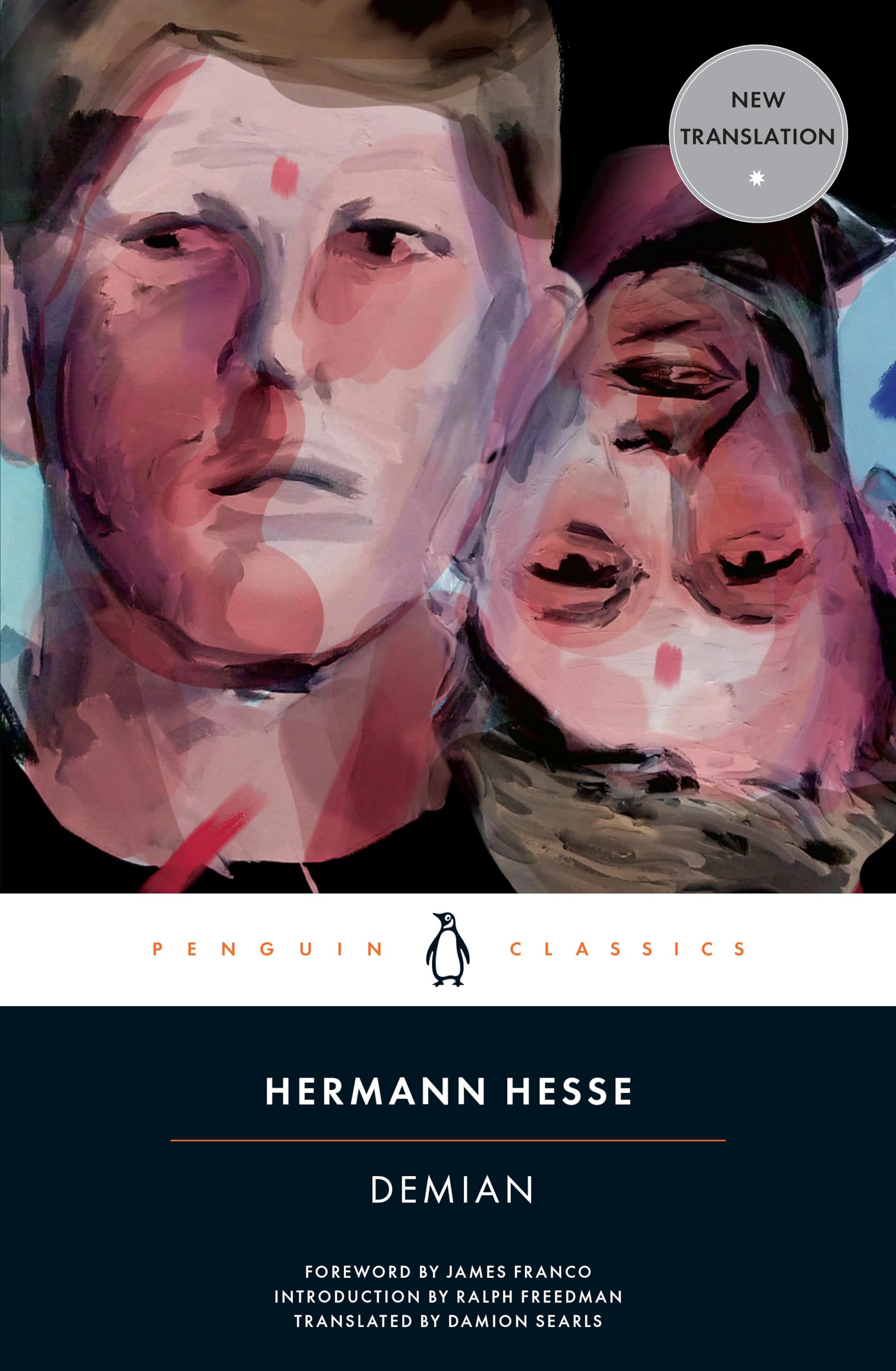
A boy named Emil Sinclair, naïve and dependent, grows up in a well-to-do family. He perceives two realms:
- The world of light—home, warmth, safety, morality.
- The world of darkness—cold, dangerous, alluring, and adventurous.
Sinclair gets entangled with a boy named Kromer, who coerces him into obedience through blackmail. Cornered and afraid, Sinclair is rescued by Max Demian, a mysterious boy he admires and even senses as something divine. Demian befriends Sinclair and frees him from Kromer’s hold, though Sinclair never learns how—and never asks. Demian awakens new ways of seeing the world in Sinclair. Not long after, Demian and Sinclair drift apart.
Years pass. Sinclair experiments with life, art, friendships, and ideas. Yet he always feels incomplete, restless, searching. One day he notices a beautiful girl from afar. He never meets her but becomes inspired to change. Attempting to paint her portrait, he creates an image that looks nothing like her, yet it fascinates him. The painting becomes his symbolic guide, embodying something beyond the girl herself.
Sinclair befriends Pistorius, an eccentric organist, who introduces him to ancient religions, mystical symbols, and the god Abraxas—a deity uniting good and evil, light and dark. From Pistorius, Sinclair learns that true growth comes from integrating opposites. Eventually, their relationship falters when Sinclair dismisses Pistorius in a careless way.
Later, in college, Sinclair reunites with Demian and discovers that the figure from his painting was not the girl at all—it was Frau Eva, Demian’s mother. Meeting her fills Sinclair with a sense of completeness and profound contentment. At Demian’s home, Sinclair spends his happiest days, immersed in conversations about life, destiny, and inner truth.
When war breaks out, Sinclair and Demian are drafted. Demian is fatally wounded. Before dying, he tells Sinclair that whenever he needs him, he will find him within himself. With Demian’s passing, Sinclair achieves individuation: integrating his Shadow (Kromer, his darkness) and his Anima (Eva, his inner feminine) into a fuller, more authentic Self.
Key Themes
- Breaking orthodoxy: Challenging conventional morality, religion, and inherited beliefs.
- The Shadow: Confronting and integrating the dark, repressed aspects of the psyche.
- The Anima: Discovering the feminine principle (Eve) as a source of wholeness.
- Unconscious guidance: Dreams, symbols, and inner figures as messengers.
- Abraxas: The unity of opposites, transcending simplistic “good vs evil.”
- Individuation: The lifelong process of becoming one’s true Self.
- The Mark of Cain: Reinterpreted as a sign of distinction and spiritual awakening, not guilt.
- Will and transformation: Through inner struggle and will, one can transform reality.